
Voyage into the Basque Country
This thin strip of land boasts some of France’s most famous seaside resorts, but also a plethora of charming villages further inland. Surrounded by hills and ocean, it is a haven of art, architecture and gastronomy.

If there’s one place in the world that can bring together surfers and heritage lovers, hikers and gour-mets, the young and the old, celeb-rities and ordinary people, it’s the Basque Country. A place with both lush green mountains and long beaches laced with whitecapped waves, a host of selective and stylish addresses but also laid-back lodgings for backpackers, it combines everything you could want, even if that means it can suffer from summer overcrowding. Destinations like Biarritz and Saint-Jean-de-Luz are not to be missed, but let’s discover three other jewels: Cambo-les-Bains, Hendaye and Anglet.
The first, situated 20 minutes from the ocean, owes its fame to the Honorine thermal spring, which rose to prominence under the patron-age of Napoleon III and Empress Eugénie. Generations of balneotherapy lovers have sought a cure to their ills in the mineral-rich waters, including Edmond Rostand, the author of Cyrano de Bergerac, whose lung condition led him to build a house here – the Villa Arnaga, a spectacular and bewildering hodgepodge of styles, now a museum. The air here is remarkably fresh and pleasant, and the views over the richly verdant hills are magnif-icent – a green, shimmering paradise, whose microclimate is “tonically relaxing”, they say. In other words, it’s a place for everyone, from spa lovers to hiking enthusiasts. The latter won’t want to miss the beautiful walk up the Bergerie hill. From the top, you’ll be afforded a view of the Rhune, the Basque country’s most emblematic mountain. An official GR hiking trail also links Cambo-les-Bains to the village of Sare, ranked among France’s “most beautiful villages”. Elsewhere in Cambo-les-Bains, the Haut-Cambo neighbourhood on the Nive River is home to traditional Basque houses known as “Etxea” with whitewashed facades and colourful half-timbering. Every year in September, the village celebrates the Gâteau Basque (the region’s most famous des-sert), which they claim to have invented. The region is indeed renowned for its delicacies: from charcuterie to peppers to the chocolate that Spanish Jews imported here in the 17th century, as the charismatic chocolate-maker Christophe Puyodebat recounts at his work-shop-boutique-museum – well worth the visit. So is Biperduna, a charming, hillside farm where Espelette chilli peppers are cultivated organically. Maialen, aged 66 and a Basque Country native, speaks of her rich soils with a passion that’s contagious. “Three years ago when we switched to permaculture, people thought we were mad!” she enthuses. “Today, it’s so satisfying to be able to grow our vegeta-bles and peppers without chemicals, thanks to the humus in our soil and the water it nat-urally retains.”
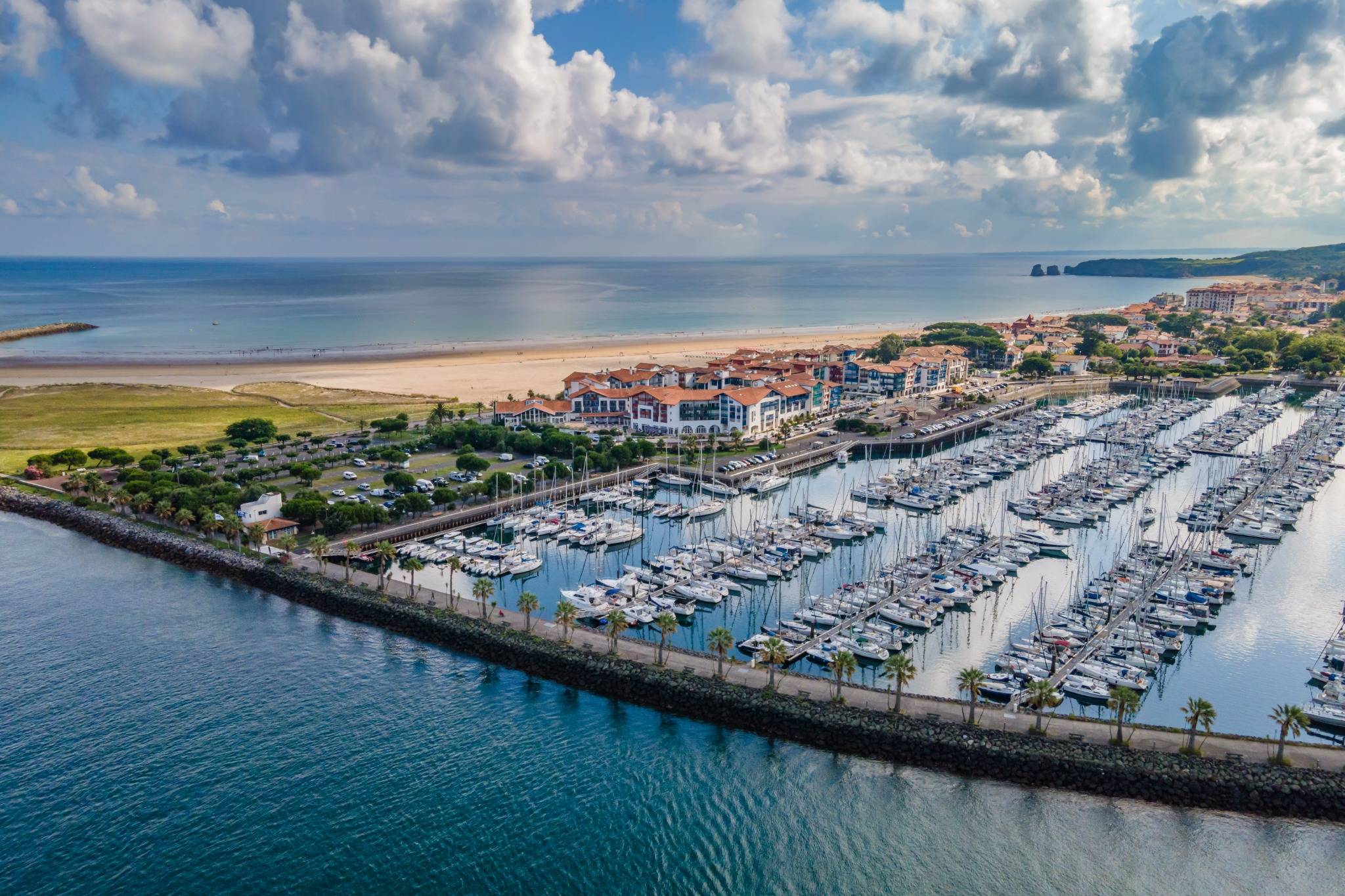
Just 40 minutes from Cambo, a very differ-ent atmosphere awaits: the story of Hendaye is that of the birth of seaside tourism at the turn of the 20th century, with its astonishing Moorish-style casino (1884), its superb luxury hotel, L’Eskualduna, and its “neo-Basque”, half-timbered houses designed by Edmond Durandeau. “A real source of pride for the town,” says our guide. As is the superb rib-bon of golden sand stretching for more than three kilometres to the great rocks of Deux Jumeaux. Nestled in the hollow of a cove, the beach is sheltered from the powerful Atlan-tic rollers, making it a swimmers’ paradise.
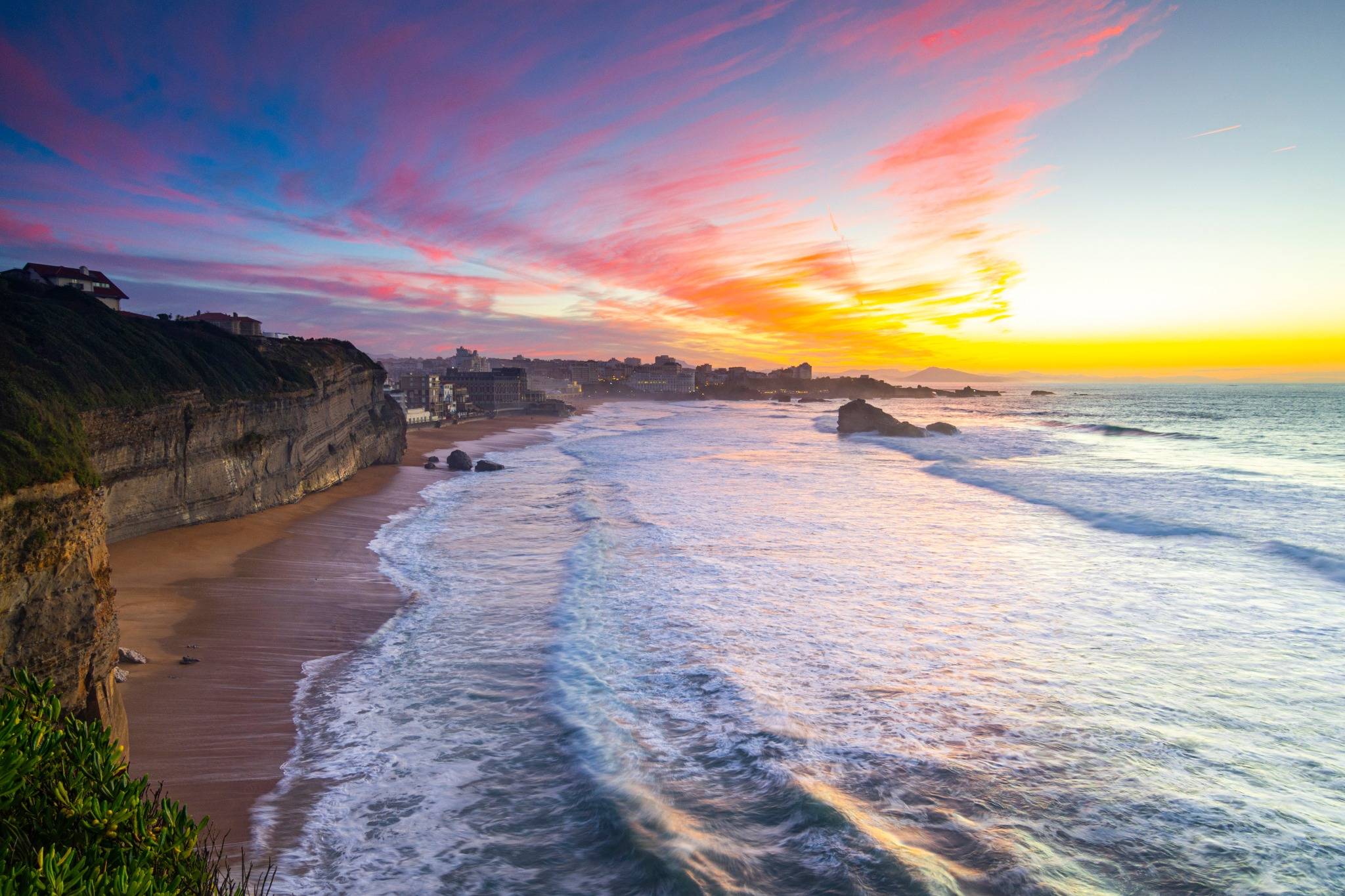
A pelota’s throw – or a ferry ride – across the Bidasoa River awaits Spain and the small town of Hondarribia. At the other end of the bay, the neo-Gothic Château Observa-toire d’Abbadia, built by Viollet-le-Duc, offers panoramic views. Nearby, the Domaine d’Ab-badia, a protected natural site, is the perfect place for long, bucolic strolls over the moors, cliffs, woodland and flower-filled meadows peppered with plump, hairy sheep. Fifteen kilometres up the coast from Hendaye, the picturesque village of Guéthary (“the small-est” on the Atlantic coast) and its tiny fish-ing port are worth a stop if only to view a sunset from the La Terrasse overlook. Then there’s Anglet, with its beaches stretching as far as the eye can see. Here we see the ocean in all its power and spectacle, with waves that attract surfers from far and wide. But Anglet also draws culture lovers with its new Georges Pompidou gallery, inaugurated in 2023 with an exhibition of Daniel Buren’s works. And don’t miss the Villa Beatrix Enea, which exhibits part of the town’s fine collec-tion of contemporary art. Thanks to its net-work of bicycle paths, Anglet is a delight to explore, from the coast to the Pignada forest to the Adour River, which separates it from Bayonne. Relax in one of the beachside paillote restaurants while watching the surfers at play and enjoying delicious dishes of del-icate chipiron squid and other local produce. And for those looking for a haven in a cocoon of greenery, a superb retreat created by a wealthy Scot in the 1930s has recently been renovated: part hotel, part restaurant, part bar and part spa, Brindos is a lovely place to relax and enjoy a glass of white wine on the terrace overlooking the lake. Far from the din of the ocean surf, the magic envelops you instantly.
Valérie Sarre


